

Reaching the peak of pleasure during sex is called an orgasm, or climax. Partners can reach this peak together, or at different times. But not every sexual encounter has to end in orgasm. It’s never fair to jump to conclusions that a lack of orgasm means one partner failed or is somehow weak.
It’s important to first understand that not reaching orgasm together every single time is completely normal. But if, again and again, sex brings confusion, indifference, unwillingness, or discomfort instead of joy, that’s a sign worth paying attention to — and it may be time to seek help from a sexual health counselor.
When a couple maintains a strong, loving relationship, communicates well about life together, and treats each other with warmth and care, there’s little room for sex to feel unsatisfying or unsuccessful.

Still, many partners — no matter how close they are — hide their sexual concerns out of fear of speaking openly, even with close friends, family, or a doctor.
But not reaching orgasm isn’t a “problem” in itself. It’s simply something that can get in the way of fully enjoying sex. Studies on this topic show that only around 25% of women reach orgasm during penetrative sex.
This actually shows that many women don’t fully understand or recognize what an orgasm experience feels like. The same research points out that some women even tell their partners they climaxed, just to make him feel good, when in fact they didn’t.
Do you believe a woman could potentially reach orgasm up to 100 times in one hour? It sounds unbelievable, but it’s a fact confirmed by research. This shows that reaching orgasm isn’t some impossibly difficult task. There’s no rule saying every sexual encounter must end in orgasm, but it’s worth striving to make each experience as fulfilling as possible — because doing so brings physical and mental relaxation, strengthens marriages and relationships, and deepens the bond between partners.
The Four Natural Phases of Sexual Response
Sexuality is a pleasure we’re naturally born with. Sexual desire is a normal urge that can arise in any healthy person’s mind. The natural sexual cycle can be divided into four main phases.
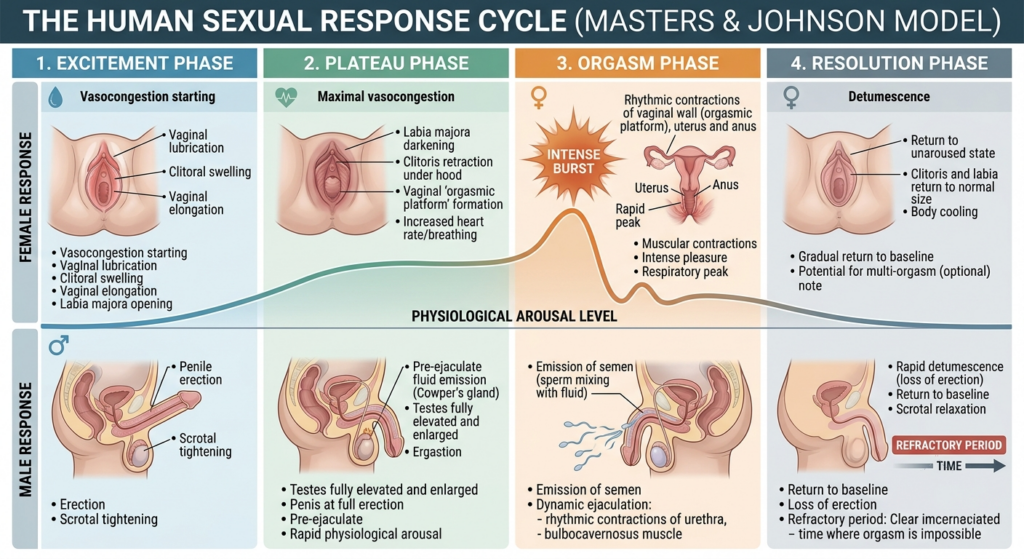
1. Desire Phase
This can show up as wanting to be intimate, kissing, hugging, daydreaming, thinking about sex, talking about it, or even watching romantic content. Sexual desire is a natural state that arises in a healthy mind.
2. Arousal Phase
When a person becomes aroused, both mind and body respond. In men, the penis becomes erect; in women, the vagina becomes wet. Breasts gradually become fuller and firmer. Eyes become more expressive, skin flushes, and the body warms up.
3. Orgasm
Men reach climax through ejaculation, while women experience a wonderful release as the muscles around the vaginal area tighten. Stimulation of the clitoris, touching the breasts, kissing, and oral sex can all help a woman reach the peak of pleasure. Changing positions during intercourse can also help her reach orgasm faster.
4. Resolution Phase
After climax, both mind and body relax. This resolution period is shorter for women, which is why a woman can potentially reach orgasm multiple times within a single sexual encounter.
How Women Experience Orgasm?.
How each person experiences and reaches the peak of pleasure varies. Any desire — sexual or otherwise — originates in the brain. Doctors explain that when someone reaches orgasm, the brain releases pleasure chemicals like endorphins, dopamine, and serotonin. At the same time, nerves connected to the vagina, the clitoris, and the G-spot become stimulated. Sexual doctors point out that stimulation of these areas during intercourse helps women reach climax more quickly.

The Main Problem: Women Not Opening Up to Their Partners
Research shows that relationship issues between partners are a major reason many lose out on full sexual satisfaction. In particular, women not openly sharing their needs with their partner is one of the biggest contributing factors.
Beyond that, there are many people who struggle to reach climax for reasons other than physical health — and identifying these causes can be extremely helpful.
Reasons a Woman May Not Reach Orgasm
- Relationship problems — engaging in sex unwillingly, not understanding each other’s likes and dislikes, and unresolved resentment between partners.
- Depression or severe stress — mental relaxation for both partners matters greatly; if either one is struggling emotionally, it becomes an issue.
- Cultural and religious beliefs — some women stay silent during sex because of these beliefs, fearing that expressing their desires to their partner will damage their image.
- Childhood sexual abuse — this can create fear and reluctance toward sexual activity, preventing a woman from reaching climax.
Other contributing factors include:
- Uncontrolled diabetes
- Poor sex education during childhood
- Certain medications
- Certain surgeries (such as a hysterectomy)
If any of these reasons — or a combination of them — is affecting your sexual relationship with your partner, start making changes right away. Get his support in the process, and for any medical reasons, consult an experienced doctor.
Truly enjoy your sex life. It’s not something to feel ashamed of. Make it a source of joy for both women and men alike.
You might be like : Does Penis Size Really Affect a Woman’s Sexual Satisfaction? Yes — But Not the Way You Think

