
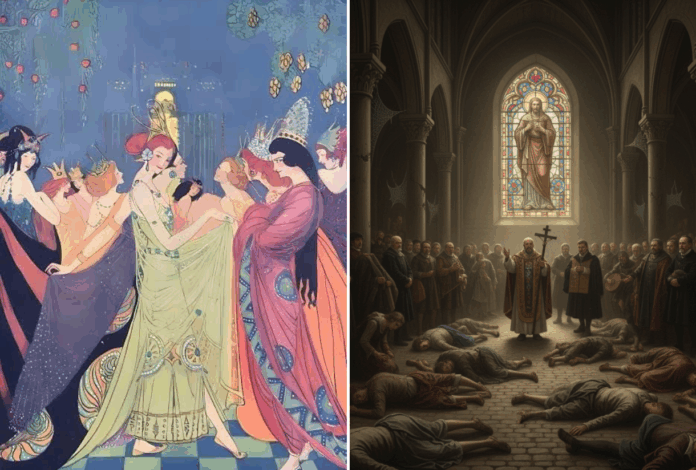
Imagine stepping outside your home and seeing your neighbor dancing in the street. Not a joyful celebration, but a frantic, exhausted dance that won’t stop. Now imagine hundreds of people doing the same thing, unable to control themselves, dancing until they drop from exhaustion—or worse. This isn’t a scene from a horror movie. It actually happened in Europe, and it remains one of history’s most bizarre and unsettling mysteries.
When Bodies Wouldn’t Stop Moving
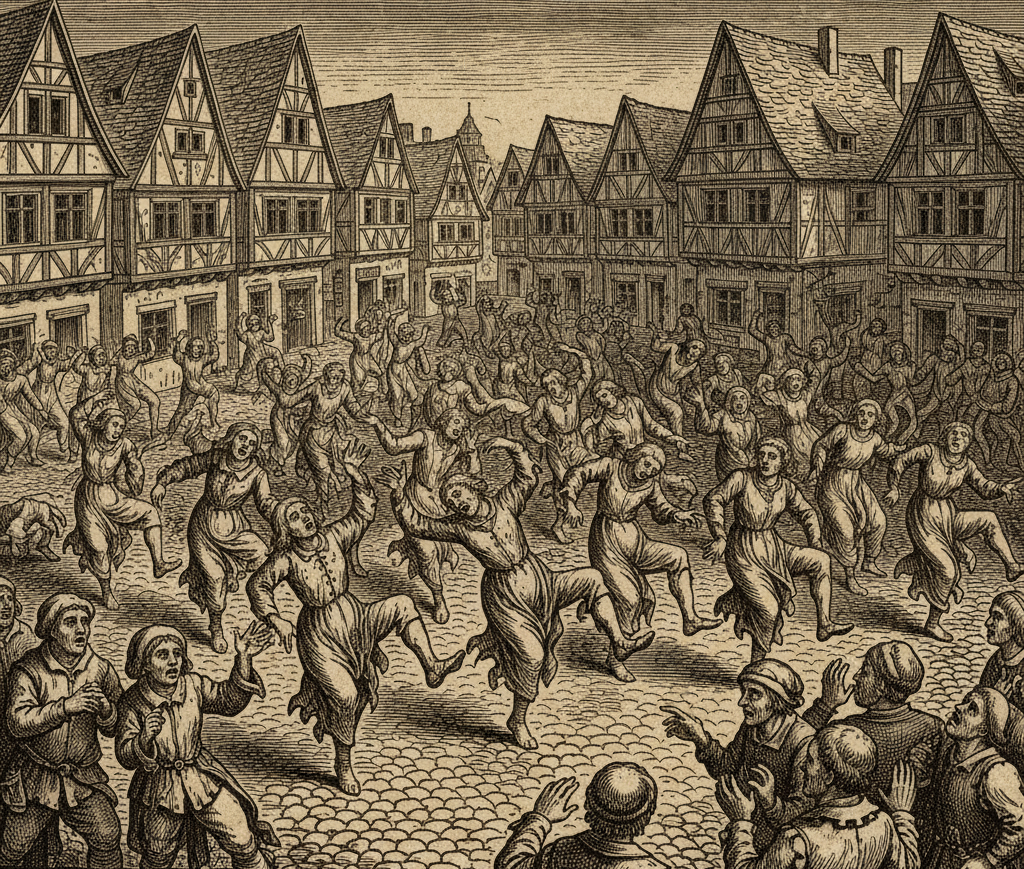
The dancing plague—also known as dancing mania—was a large-scale phenomenon that struck various parts of Europe throughout history. These episodes involved people dancing uncontrollably and unwillingly for days or even weeks, as if possessed by an invisible force they couldn’t resist. The dancing wasn’t a celebration. It was relentless, exhausting, and often deadly.
People would dance through pain, through blistered and bleeding feet, through complete exhaustion. The physical toll was devastating. Dancers suffered from fatigue, heart attacks, and strokes. In the most tragic cases, they danced themselves to death.
Two Major Outbreaks That Shocked Europe
The 1374 Dancing Plague
One of the first major outbreaks of the phenomenon took place in the Holy Roman Empire in 1374, rapidly spreading throughout Europe to countries including France, Germany, and the Netherlands. Thousands of people were affected as the mania swept from town to town like wildfire, leaving communities bewildered and terrified.
The 1518 Dancing Plague of Strasbourg: The Most Famous Case
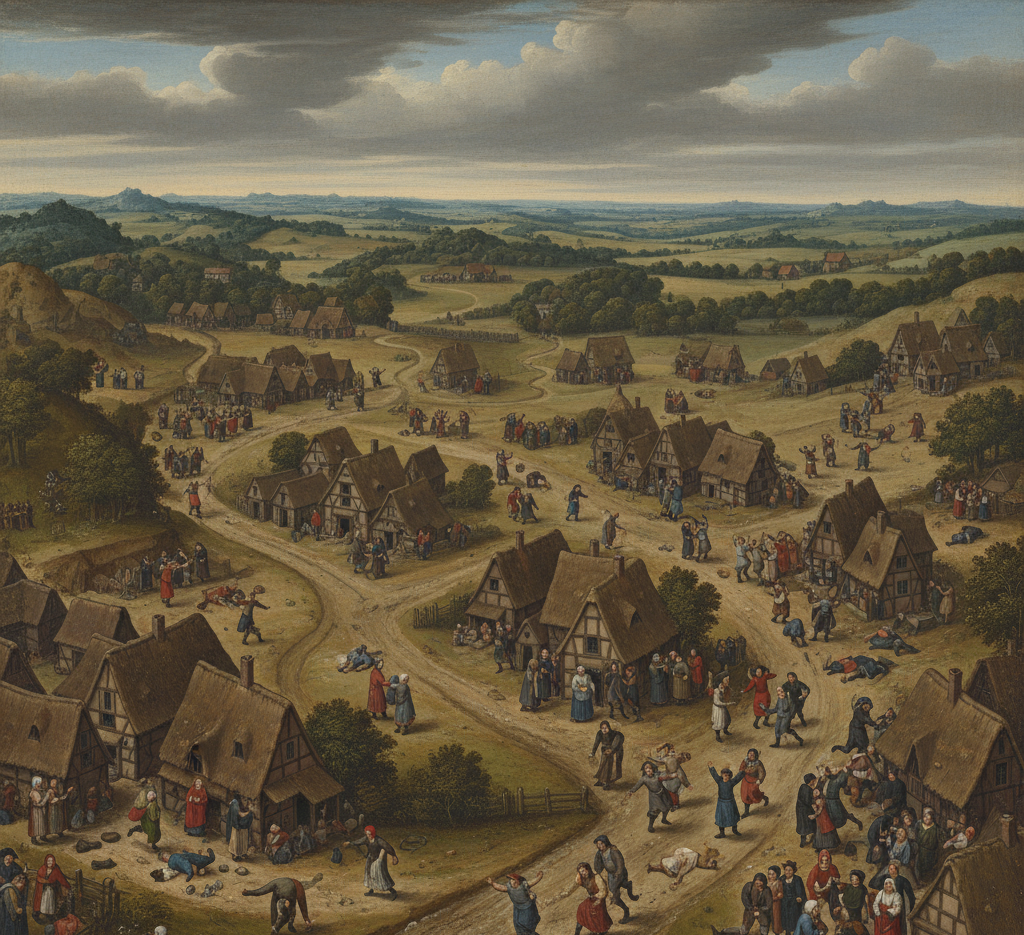
The most thoroughly documented—and perhaps most disturbing—outbreak occurred in Strasbourg, France, in the summer of 1518. In July 1518, a woman whose name was given as Frau Troffea stepped into the street and began dancing. There was no music. No festival. No celebration. Just a woman who couldn’t stop moving.
Frau Troffea had started dancing on 14 July on the narrow cobbled street outside her half-timbered home. Despite her husband’s desperate pleas for her to stop, she continued for hours. When darkness fell, she collapsed in a heap of exhaustion, only to wake up the next morning and start dancing again—before hunger or thirst could even register. She danced on swollen, aching feet for days.
At first, onlookers thought it was strange but perhaps harmless. By the third day, crowds gathered to watch the bizarre spectacle. But things were about to get much worse.
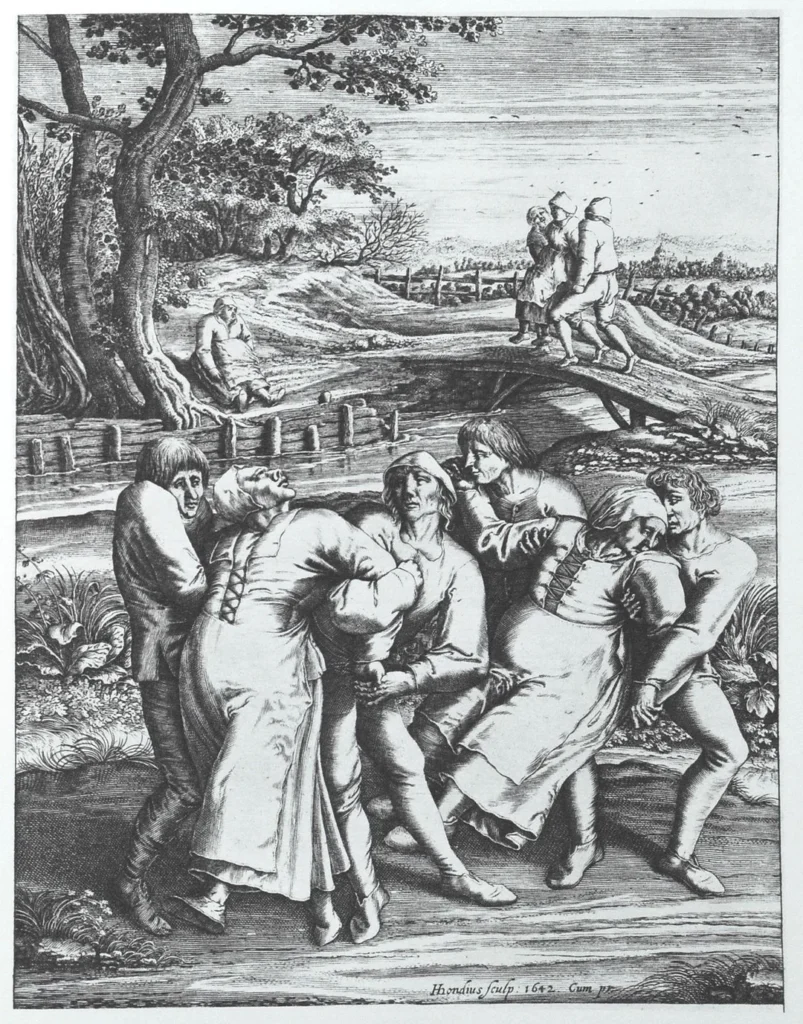
Within a week, more than 30 other people were similarly attending, dancing long past the point of injury. What started with one woman quickly became an epidemic. Within a month, the number had exploded to around 400 people dancing uncontrollably in the streets of Strasbourg.
The authorities watched in horror as their citizens danced themselves into oblivion. At the height of the dancing plague, as many as fifteen people were dying each day from heart attacks, strokes, and sheer exhaustion.
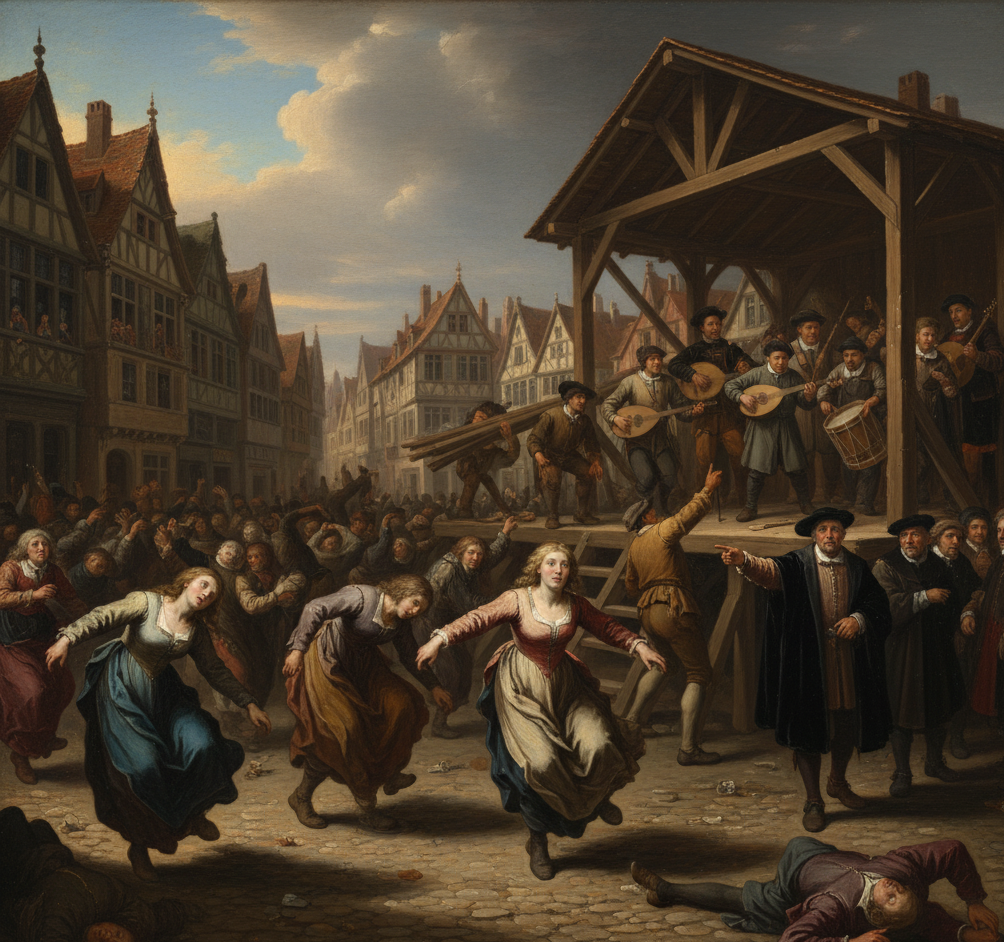
The city council had to do something. But what do you do when hundreds of people can’t stop dancing? Their solution seems crazy by today’s standards. The authorities believed that the cure for the frenzy was more dancing day and night. They decided to construct a wooden stage for the dancers and even hired musicians and professional dancers to keep the dancing going around the clock.
This backfired spectacularly. Instead of curing the afflicted, it only encouraged more people to join in. Finally, the council reversed course, banning public dancing as people danced in fear that it was a punishment from Saint Vitus.
For over 500 years, historians, doctors, and scientists have tried to solve the mystery of the dancing plague. The exact cause remains controversial, but several compelling theories have emerged:
Theory 1: Mass Psychogenic Illness (Mass Hysteria)
The most widely accepted theory was that of American medical historian John Waller, who laid out reasons for believing that the dancing plague was a form of mass psychogenic disorder. This is essentially mass hysteria—a psychological condition that spreads through a group of people.
Waller cited a series of famines and the presence of diseases such as smallpox and syphilis as the overwhelming stressors affecting residents of Strasbourg. The people were living through hell. Food was scarce, disease was rampant, and death was everywhere. Their minds and bodies were under extreme stress.
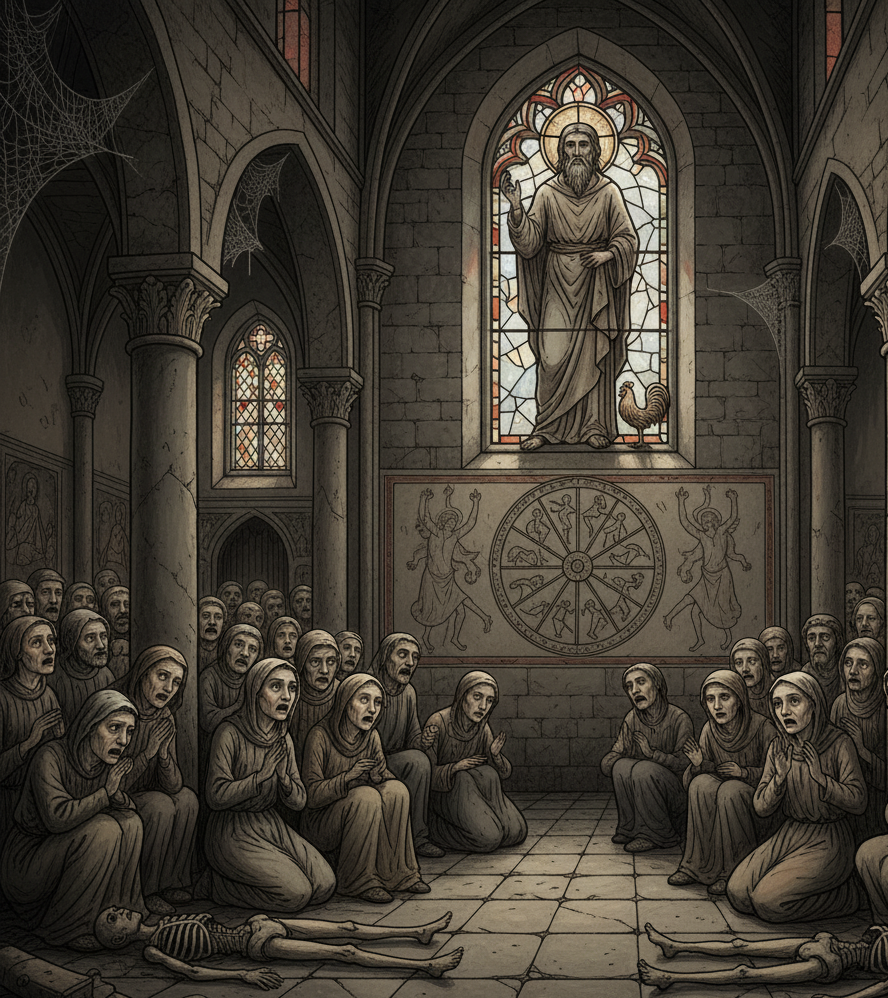
Add to this mix a powerful local superstition: There was a local belief that those who failed to propitiate St. Vitus, patron saint of people with epilepsy and of dancers, would be cursed by being forced to dance. When people are desperate, stressed, and genuinely believe they can be cursed to dance, their fear can manifest physically—creating exactly the symptoms they fear.
Another theory points to a natural culprit: Ergot poisoning, caused by a fungus that grows on rye and other grains, which can cause hallucinations, mental stress, and muscle cramps. This toxic mold can contaminate bread, and eating it can produce horrifying symptoms, including convulsions and hallucinations.
However, most historians have moved away from this theory. Ergot can cause convulsions and hallucinations, but also restricts blood flow to the extremities, making it unlikely that someone poisoned by it would be able to dance for several days in a row. Plus, it’s hard to explain why so many people would react in exactly the same way—by dancing specifically.

Most historians today believe the dancing plague was a manifestation of extreme psychological stress in a society pushed to its breaking point. The people of Strasbourg were starving, sick, and terrified. Their suffering found expression in the cultural language they knew—the curse of St. Vitus, the dancing saint. Their bodies acted out what their minds couldn’t process.
The End of the Plague
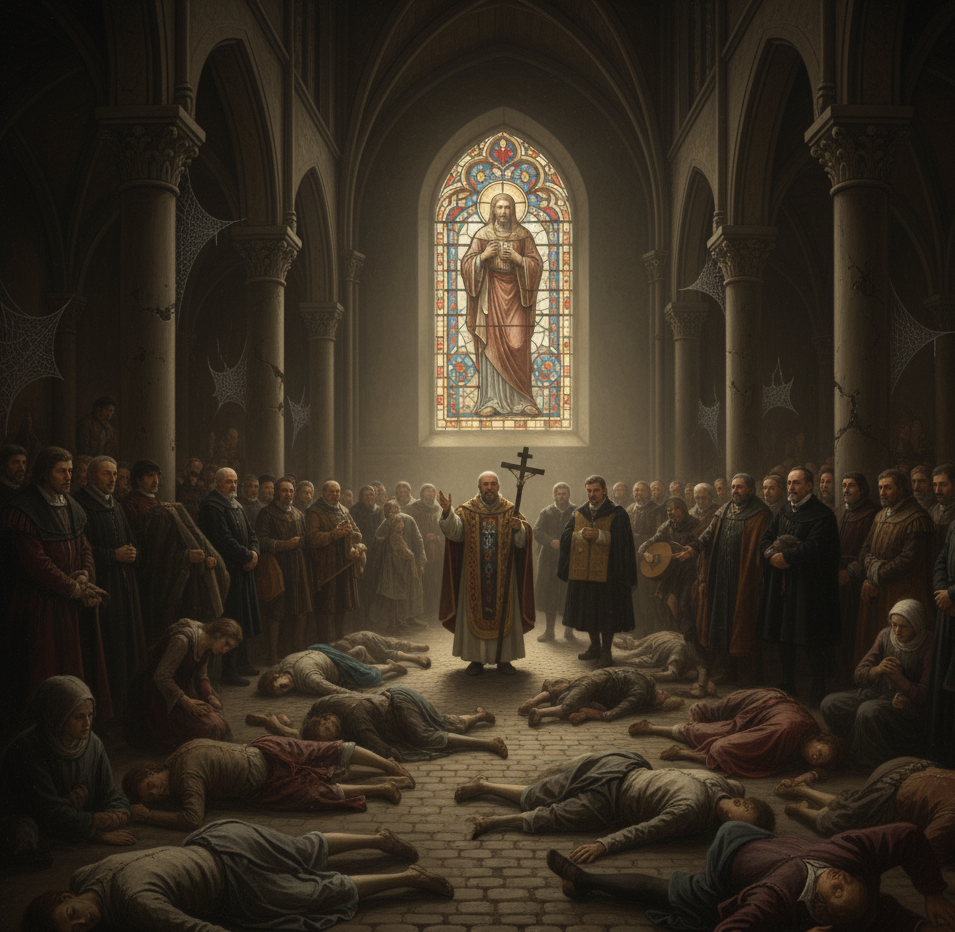
The dancing plague lasted for over a month, from mid-July to late August or early September. Eventually, the worst-affected dancers were taken to the shrine of Saint Vitus, where priests performed healing rituals. They placed small crosses in the dancers’ hands and red shoes on their feet, sprinkling them with holy water and consecrated oil.
Whether through faith, exhaustion, or the natural course of the hysteria running out, the dancing finally stopped. Within a week or so, the stream of suffering pilgrims to the shrine slowed to a trickle. The nightmare was over.
Five centuries later, the dancing plague of 1518 still fascinates and disturbs us. It’s a stark reminder that the human mind and body are connected in ways we still don’t fully understand. When communities face extreme stress—whether from famine, disease, war, or fear—people can behave in ways that seem impossible.
The dancing plague wasn’t just about dancing. It was about suffering, fear, faith, and the desperate need for release from unbearable circumstances. These weren’t crazy people or attention-seekers. They were regular folks pushed past their breaking point, their trauma expressing itself in the most public and physical way imaginable.
Today, we still see echoes of mass psychogenic illness in different forms. The story of Strasbourg teaches us something important: we’re all vulnerable when stress, belief, and fear collide in just the right way. Our minds are influential—powerful enough to make our bodies do things we’d never imagine.
The dancing plague remains one of history’s most haunting mysteries—not because we don’t understand what happened, but because we do. And that’s what makes it so frightening.

