
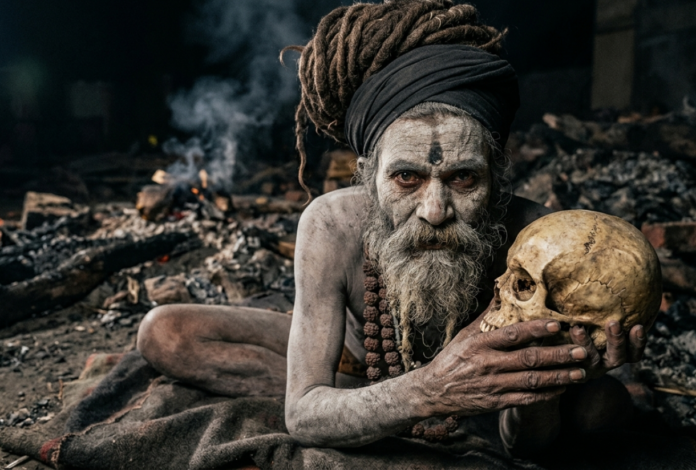
India is a land of wonders. Heaven and hell both exist within its borders. It is a country overflowing with languages, traditions, cultures, and religions. Among all the people who live there, the Aghori sadhus hold a place unlike any other — because of a way of life that shocks the outside world to its core.
They stand against mainstream Hinduism. Eating human flesh, sacrificing animals, using human skulls in religious ceremonies, and conducting rituals with alcohol and dead bodies — these are practices that stretch far beyond ordinary human understanding.
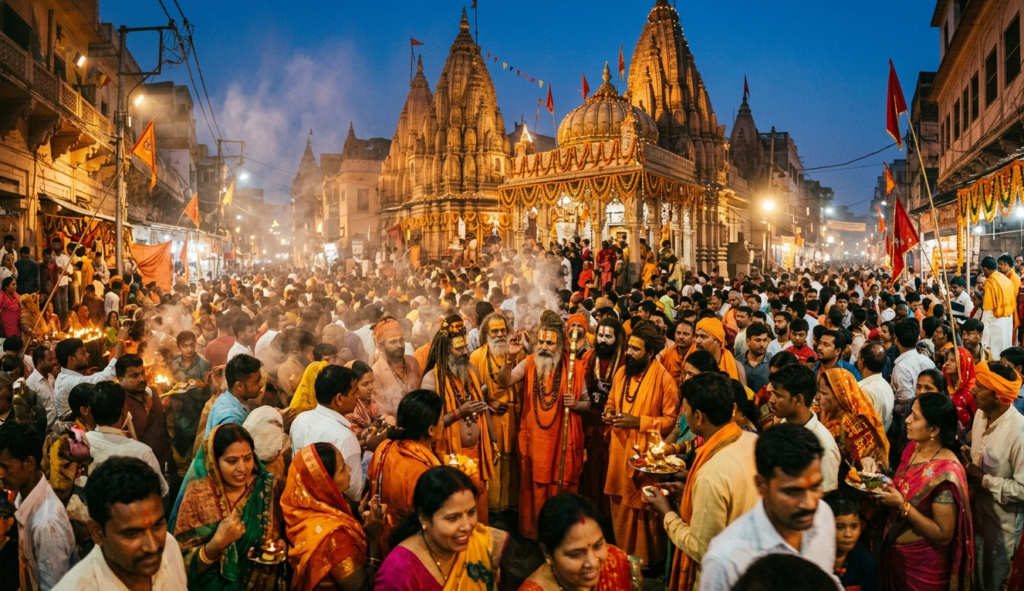
What does “Aghori” actually mean?.
The name Aghori comes from the culture of root Aghor. The word carries several meanings:”that which is never forgotten,” “that which is not terrible,” or “that which is free from darkness.” According to the Aghori sadhus themselves, it means “free from fear” and “beyond violence.” Yet despite that meaning, their rituals are precisely the kind of thing that fills ordinary people with fear and disgust.
They are devoted followers of the god Shiva — the most powerful of all Hindu gods and the one said to destroy everything that exists. In the Aghori belief, every human heart is Shiva himself. But around that divine core sit layers of attachment: the desire to please the senses, anger, greed, emotion, fear, hatred, and jealousy. The Aghori’s main goal is to cut free from all of those attachments.
“By living in a graveyard, they aim to destroy fear. By going naked, they aim to destroy shame. The destination is always the same: moksha — liberation.”
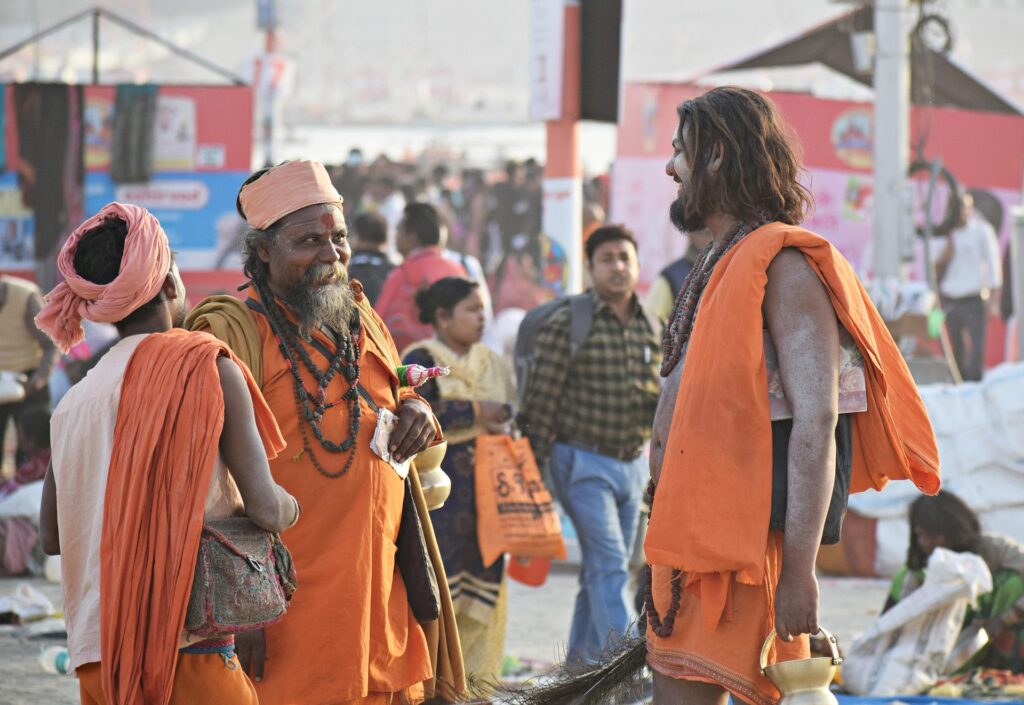
A life lived at the edge of existence.
Aghori sadhus live by what they see as the universe’s simplest law. They wander naked as a reminder that life in this illusory world ends in death. Free from love, hatred, jealousy, and ego, they work toward enlightenment through the deepest possible ritual practice. They believe the gods live inside everything, so they treat every object as sacred and every moment as auspicious.
Their favorite food is rotting human corpses that drift down the Ganges river. Beyond that, they eat dead animals and discarded food. They use a human skull as their eating bowl. They light their fires with wood left over from funeral pyres. They wrap their bodies in the cloth used to cover the dead. They smear themselves with ash from burnt corpses. They wear jewellery made from human bones. They have no homes — their dwelling places are cremation grounds.
Among all Hindu holy men, the Aghoris are considered the most dangerous and extreme. Their tantric practices — which involve the sacrifice of animals and humans, and the eating of human flesh — are connected to the fierce aspects of Shiva and goddesses such as Kali, Durga, Kamakhya, and Chamunda.

Where did they come from?.
The Aghori sadhus are considered to have split from a 14th-century sect of Shiva devotees called the Kapalikas. The person regarded as the founding father of the modern Aghori tradition is Kina Ram — an Aghori sadhu who lived in the 18th century and is said to have lived for more than 150 years.
The most important pilgrimage site for Aghori sadhus and devotees is the Kina Ram Ashram in Ravindrapuri, Varanasi. The tomb of Kina Ram himself sits inside this ashram, and both sadhus and lay devotees travel there to pay their respects.
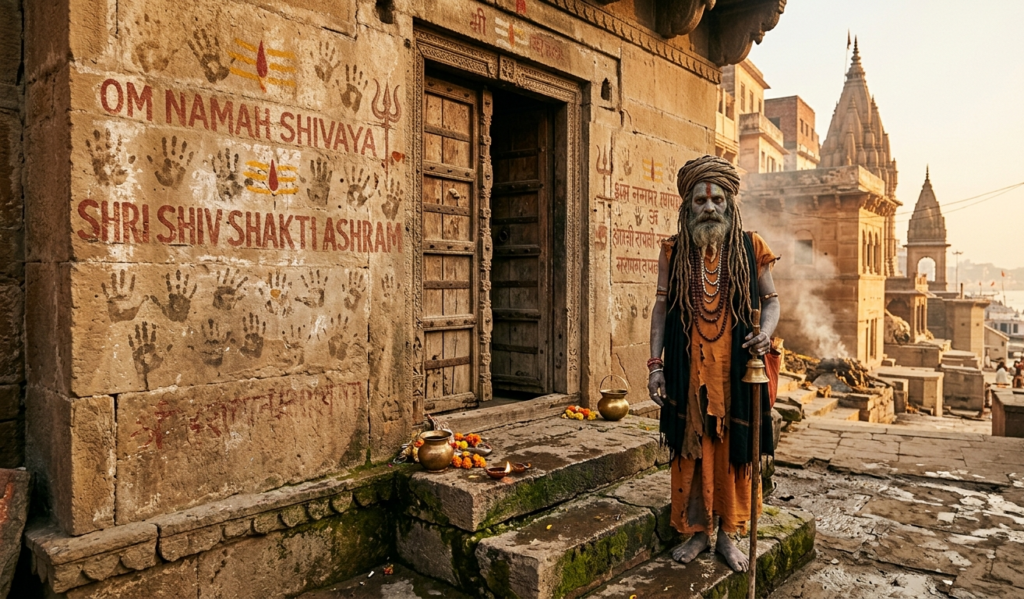
Becoming an Aghori.
Life as an Aghori sadhu is not easy. To become one, a student must meditate without interruption for 12 years under the guidance of a master sadhu. Only after that can any real spiritual power be reached. The path follows a strict set of rules.
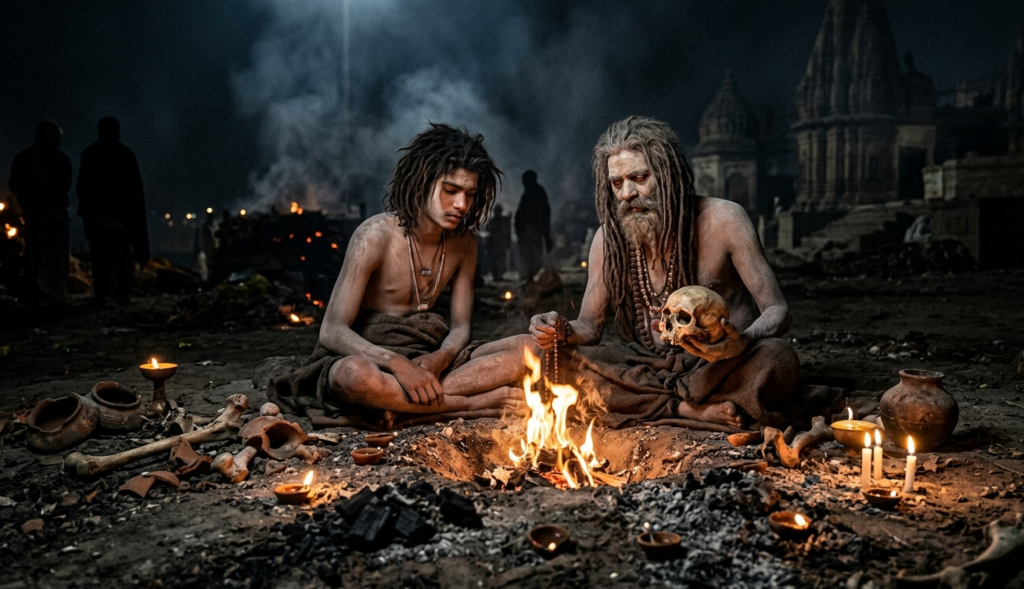
First, the student must find a master. Then he must spend his time in the master’s service, doing whatever is asked. His next task is to obtain a kappal — a human skull — which will be his only ritual object until he reaches the level of a yogi. He must smear his body with ash, symbolising the form of Shiva. The final vow is to eat a rotting human corpse and to meditate on top of a dead body. Their drink is the urine of animals.
The power to heal.
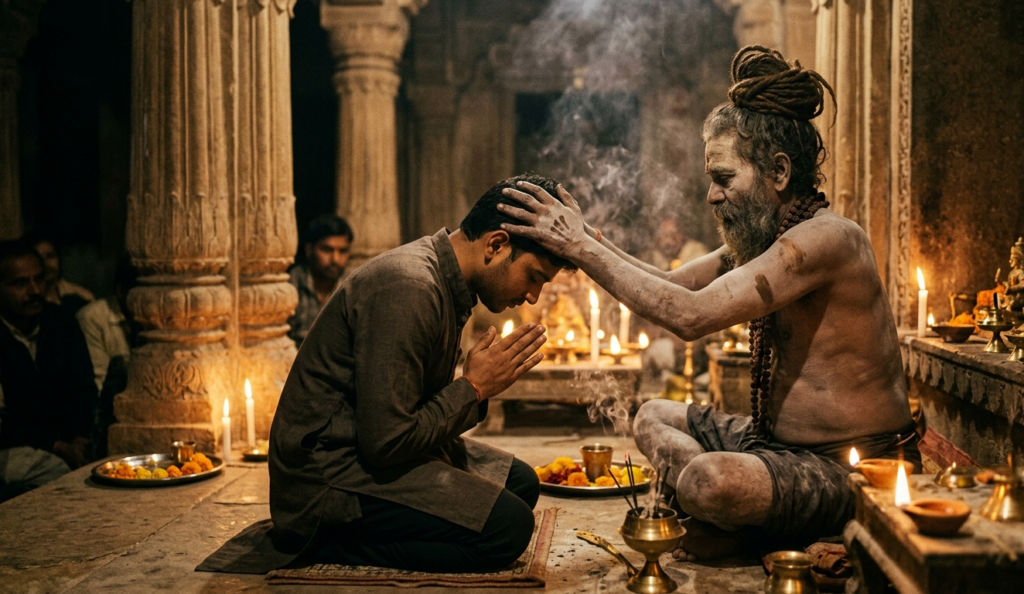
Devotees believe that Aghori sadhus have genuine healing abilities. By bringing the body and mind into perfect unity, they are said to tap into a power that can cure illness. The sadhus themselves call it a “transformative healing” — something beyond ordinary medicine, born from years of extreme spiritual discipline at the edge of life and death.

