

Every day, many people around us suffer from different kinds of illnesses. Disease can strike anyone at any age, and even a single moment spent sick is deeply painful. That is why taking care of your own health is always your personal responsibility.

Today, we bring you information about a disease that is talked about more and more — Cirrhosis. The number of cirrhosis patients is growing fast, and this disease is causing serious and heartbreaking situations in society.
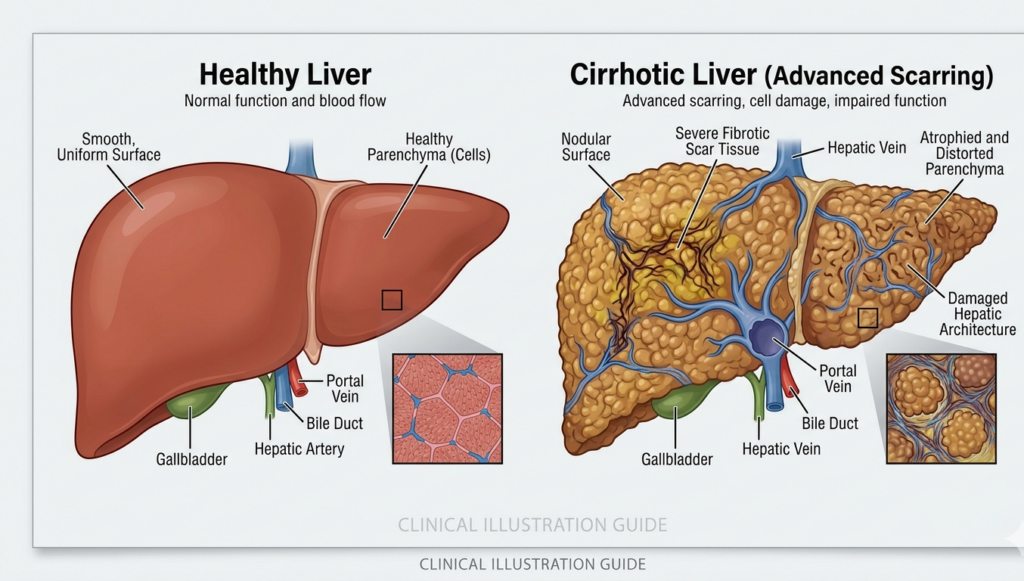
Cirrhosis happens when the liver is damaged over a long period of time. This long-term damage causes scar tissue to form inside the liver, which slowly stops the liver from working properly. In the final stages of cirrhosis, the liver can completely shut down — and that can be fatal. This condition usually develops over many years.
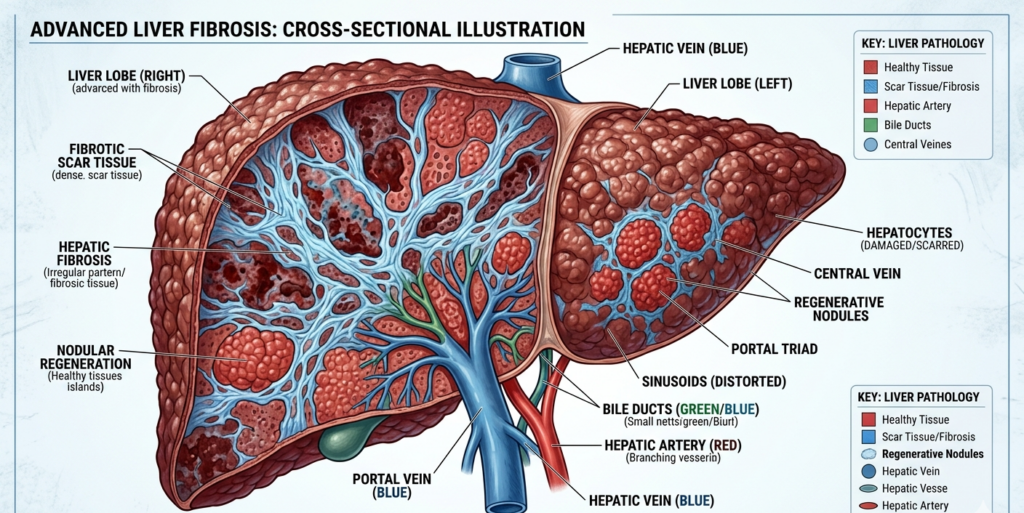
Because the word “cirrhosis” is heard so often these days, many beliefs with no scientific basis have spread through society. It is important to separate myths from facts and look at this disease with a scientific eye.
Most of the time, the early symptoms of cirrhosis are very hard to notice. Many patients only find out they have the disease after it has already progressed. Some discover it through symptoms like a swollen stomach filled with fluid, vomiting blood, or yellowing of the eyes. Others find out through low platelet counts. But in every case, the disease is usually already well advanced by the time it is discovered.

Many people think that cirrhosis only affects people who drink alcohol. This is one of the most common myths. Yes, heavy alcohol use is one cause of cirrhosis — but it is only one of many. Other causes include Hepatitis B or C, excess iron or copper in the body, obesity, inherited disorders, autoimmune liver diseases, and non-alcoholic fatty liver disease. So, thinking that non-drinkers are safe from cirrhosis is simply not true.
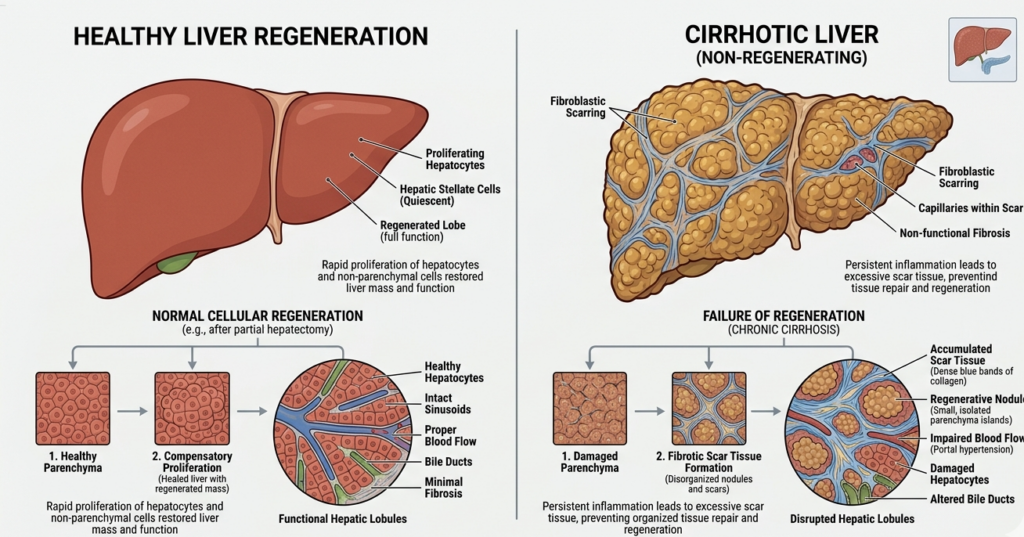
Some people believe that cirrhosis will heal on its own naturally. This is a dangerous myth. When cirrhosis progresses, the liver becomes scarred and loses function. Without treatment, it can fail completely. While the liver is known for its ability to regenerate, that ability only works when there is still healthy tissue. Once cirrhosis has set in and scarring is widespread, the liver cannot regenerate. Medical science has not confirmed any case of cirrhosis healing naturally. In many cases, surgery or even a liver transplant becomes necessary.
People with cirrhosis face a higher risk of developing liver cancer. Liver cancer is one of the serious complications that can arise from cirrhosis. That is why early detection is extremely important. If you have cirrhosis, it is recommended to visit your doctor every six months for blood tests or imaging scans to check for cancer before it spreads. Depending on the stage and severity, liver surgery or a transplant may be possible.
Some people believe that weight gain is a symptom of cirrhosis. While it is true that weight gain from excess carbohydrates and calories can lead to fat buildup in the liver and damage it, the weight gain seen in cirrhosis patients is often caused by the liver retaining fluid. This fluid buildup makes the liver’s condition worse. For this reason, a balanced diet is especially important for people with this condition.

Although liver transplants exist, not every cirrhosis patient can receive one. Even with today’s advanced medical technology, transplants are not possible for all patients. Additionally, cirrhosis can be genetic — if someone in your family has had cirrhosis, their children or grandchildren may also be at higher risk.
To reduce your risk of cirrhosis, eat a balanced diet and make it a daily habit. Exercise regularly. And most importantly — visit your doctor and get medical advice before it is too late.
YOU MAY LIKE: Lose Your Belly Fat in 30 Days : Simple Habits That Actually Work.

