
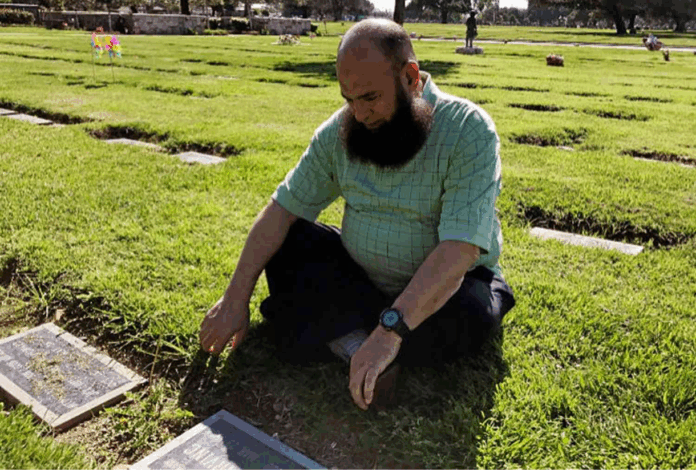
When Mohamed Bzeek settled into life as a single father in Azusa, California, he knew exactly what his life would look like: long nights on the couch next to a hospital bed, endless phone calls with doctors, and a heart that would break again and again. For more than thirty years, that’s been his reality — and he wouldn’t have it any other way.
Today, this quiet, soft-spoken man from Libya is the only foster parent in all of Los Angeles willing to take in the sickest children in the county’s foster care system. Around the world, people refer to him as “the Muslim Mother Teresa.” He is the only foster parent in this city of four million who cares solely for terminally ill children.
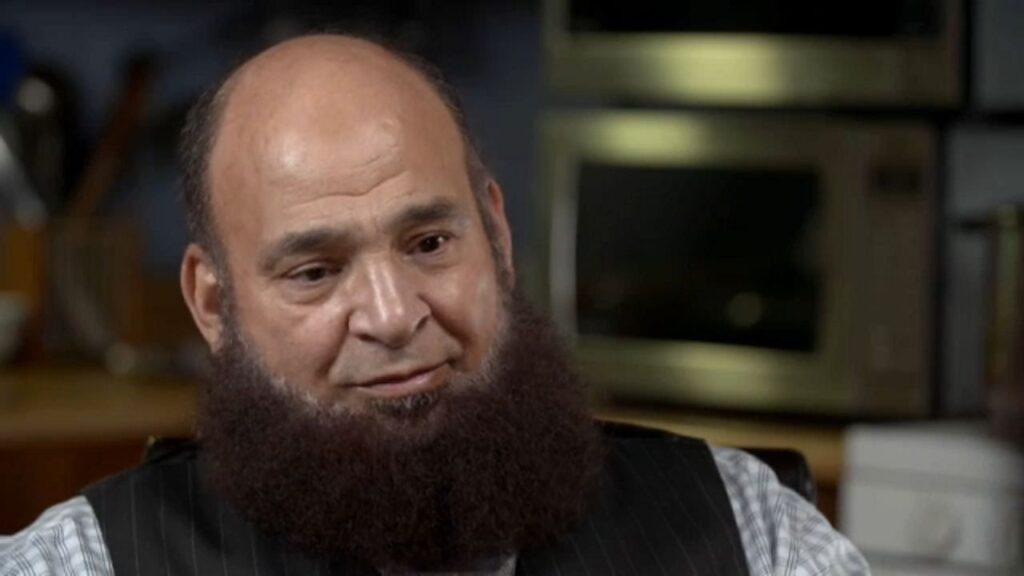
It’s a job that few would choose to have. But for Bzeek, it’s simply what needs to be done.
Over 40 years ago, Bzeek arrived in the US to study electronic engineering. In 1978, Bzeek, then a former marathon runner, came to the US from Libya. He had big plans back then — a successful career, a comfortable life. But life has a way of changing our direction.
Everything shifted when he met his wife, Dawn. She had already begun her own foster care journey, inspired by her own grandparents, who had been foster parents themselves. Bzeek was initiated into foster parenting in 1989 when he met and married his late wife, Dawn, who had been providing foster care since the early ’80s.
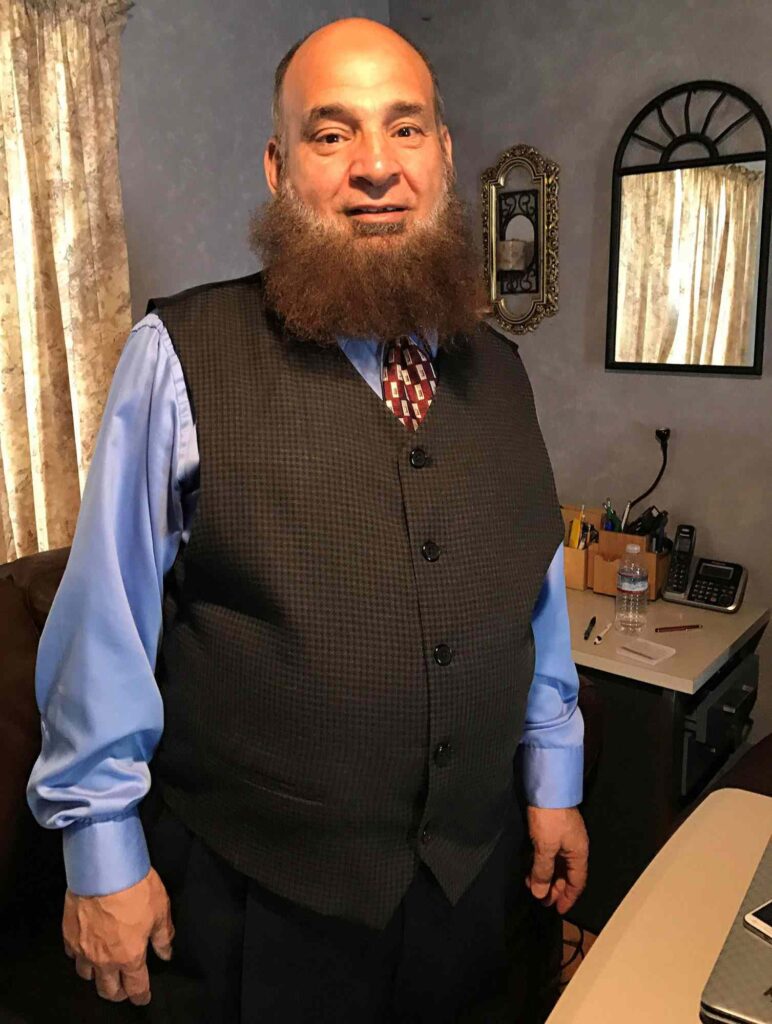
Initially, they took in children with various medical conditions. But around 1995, they made a life-changing decision. In 1995, they decided to adopt orphans left at hospitals or taken from their families by the state because of violence and pressure. They committed to caring exclusively for children with terminal illnesses — kids that nobody else wanted, kids facing their final days with no family to hold their hands.
For over 20 years, L.A. County has turned to Mohamed Bzeek to do what no other foster parent is willing to do: provide a home for terminally ill children. When child welfare officials need to find a home for a dying child, there’s really only one call they can make.
Of the 35,000 children monitored by the Los Angeles County Department of Children and Family Services, about 600 fall under the care of the department’s Medical Case Management Services, which serves those with the most severe medical needs. Most of these children end up in hospitals or institutional facilities. But sometimes, if they’re lucky, they end up at Bzeek’s home.
“If anyone ever calls us and says, ‘This kid needs to go home on hospice,’ there’s only one name we think of,” says Melissa Testerman, a social worker who finds placements for these children. “He’s the only one who would take a child who can’t make it.”
The first foster child to die in Bzeek’s care was a year old. She had spina bifida, resulting in part of her spine growing outside her skin. She was in a whole-body cast when she passed away on July 4, 1991. Bzeek was in the shower when it happened. He’ll never forget coming out and finding paramedics in his home.
“I cried for three days,” he remembers.
But instead of turning away from this pain, the Bzeeks leaned into it. By the mid-1990s, they decided to focus on caring only for terminally ill children, as no one else would take them in. They cared for as many as three terminally ill kids at one time. Over the years, Dawn became known as one of California’s most respected foster mothers. She taught classes on foster care at community colleges and worked with state task forces to improve the foster care system.
Since beginning this work in 1989, Bzeek has worked with 80 children. Ten children lost their lives in his arms. He’s buried children with short bowel syndrome, brain disorders, spinal injuries, and conditions so rare they barely have names.
One of the most touching aspects of Bzeek’s work is something simple yet profound: he names the children that nobody else names.
“In the hospital, they give birth, they leave them,” Bzeek says. “Their families don’t name them. It comes on the paper: ‘Baby boy,’ ‘Baby girl.’ I name them. I give them names.”
In many cases, these kids arrive at hospitals with no family claiming them. Medical staff refer to them by their condition, their room number, or simply “Baby” something or other. But when they come to Bzeek’s home, they get a real name. They get a real family. They get to be seen.
Bzeek’s biological son, Adam, arrived in his life in 1997, bringing his own set of challenges. Adam was born with dwarfism and brittle bone disease. His bones are so delicate that something as routine as changing a diaper could cause fractures. But Adam’s parents never treated him as less-than. They adapted to his needs.
From a young age, Adam understood what his father was doing. Bzeek says he was always frank with Adam about the nature of the children he would bring home, the ones Adam came to regard as his siblings. “They’re going to die,” Bzeek told him. “We don’t know when, but we take them and help them so they can have family, have security, have something to call home.”
Now a young man, Adam studies computer science at Citrus College. He’s learned an extraordinary lesson from his father: that life’s most meaningful moments often come through heartbreak and sacrifice.
In 2000, Dawn became seriously ill. She suffered from incapacitating seizures brought on by blood clots in her lungs. For years, she pushed through the pain, continuing to care for the children. But eventually, the illness overtook her. She succumbed to her disease and died in 2015.
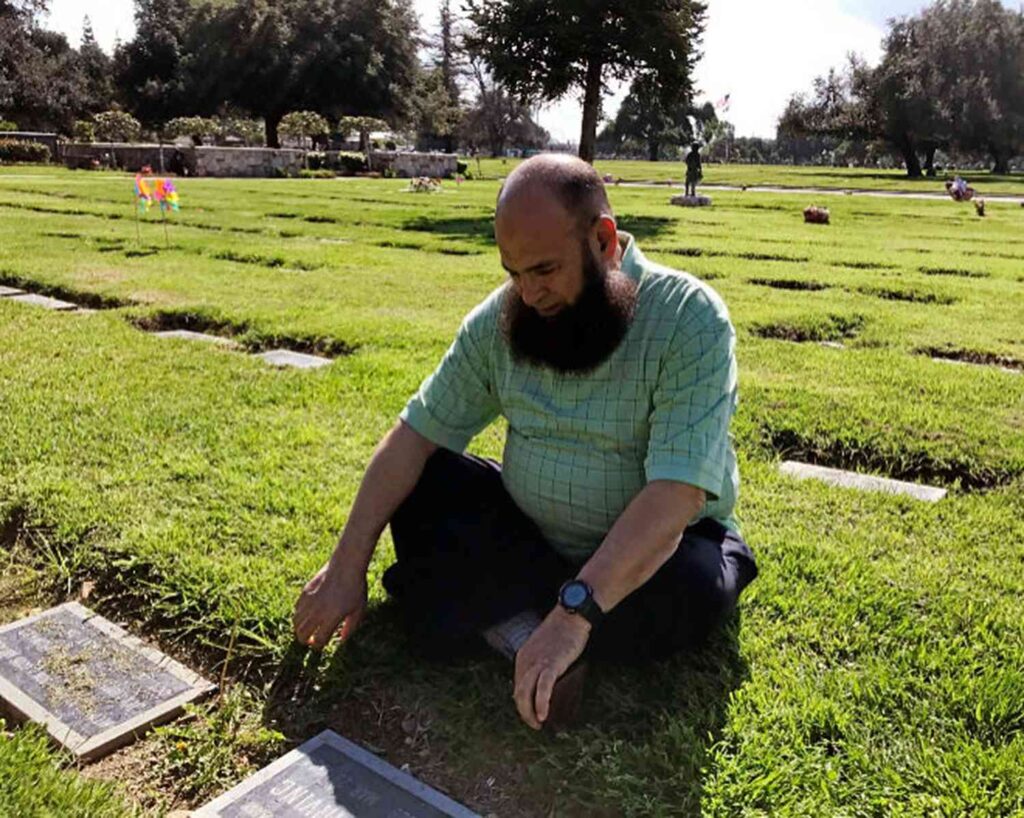
Losing his wife was devastating for Bzeek. But he faced a choice: give up the mission or continue it alone. He chose to continue.
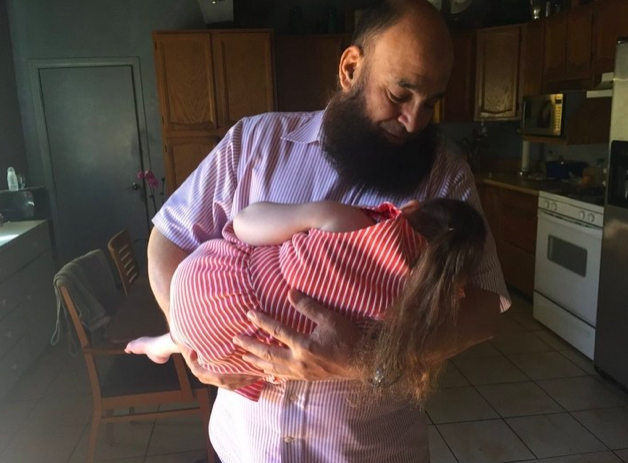
Currently, Bzeek’s home is centred on caring for a six-year-old girl. She was born with encephalocele, a rare congenital disability where part of the brain protrudes through the skull. Surgeons removed the protruding tissue, but most of her brain never appropriately developed. She is blind and deaf. She cannot move her arms or legs. She has daily seizures and requires feeding tubes 22 hours a day.
Doctors said she would only live a few weeks. That was years ago.
Mohamed Bzeek has kept her living well beyond her doctors’ expectations. Her paediatrician at Children’s Hospital Los Angeles has watched him work with this child for years. “Her life isn’t a complete misery,” the doctor says. “There are times when she’s happy and she’s quite content, and it’s all because of Mohammed.”
Bzeek doesn’t sleep much. The girl sleeps sitting up to prevent suffocation, and Bzeek sleeps on a nearby sofa, ready for whatever the night brings. He holds her through seizures, talks to her constantly even though she can’t hear, plays music, and celebrates every small moment of connection.
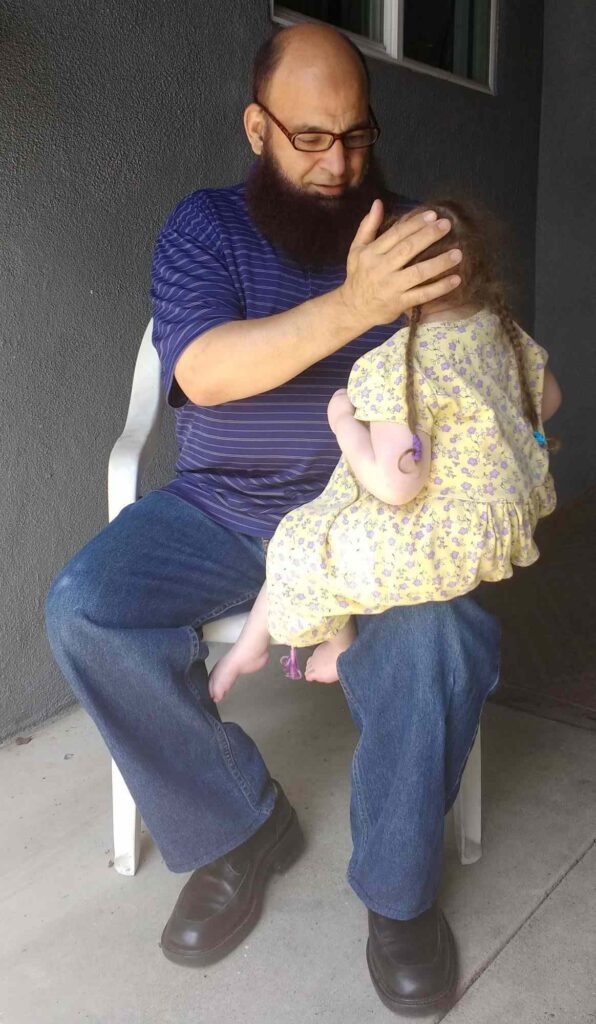
“I know she can’t hear or see, but I always talk to her,” he explains. “I always hold her, play with her, touch her. She has feelings. She has a soul. She is human.”
Bzeek’s Muslim faith is central to everything he does. He prays regularly, attends his local mosque, and sees his work as an expression of his deepest beliefs. He often speaks about compassion and the obligation to help those in need — core principles in Islam that guide his daily choices.
Much of his dedication, he says, derives from his faith. Bzeek is a practising Muslim. When asked why he does this impossible work, he speaks: “As a Muslim, I don’t hate anybody. I love everybody. I respect everybody.”
In his view, death is not something to fear or avoid discussing. It’s part of life. And if he can help a child through their final journey, providing love, presence, and dignity, then he has fulfilled his purpose.
The Day Everything Changed
For more than thirty years, Bzeek quietly did his work without much attention. Then in 2017, the Los Angeles Times published a feature story about him. Suddenly, the entire world was paying attention.
He didn’t tell anyone of his foster parenting until February 2017, when a Los Angeles Times story brought Bzeek out of anonymity and into a rush of worldwide media attention. CNN, NPR, PBS, international news networks, and numerous other outlets interviewed him. Documentary filmmakers came to his home. News outlets around the world told his story.
But the most touching response came from ordinary people. A woman who read a Los Angeles Times feature on him in 2017 set up a GoFundMe page, which has raised over $600k. His story so moved someone that they decided he deserved support.
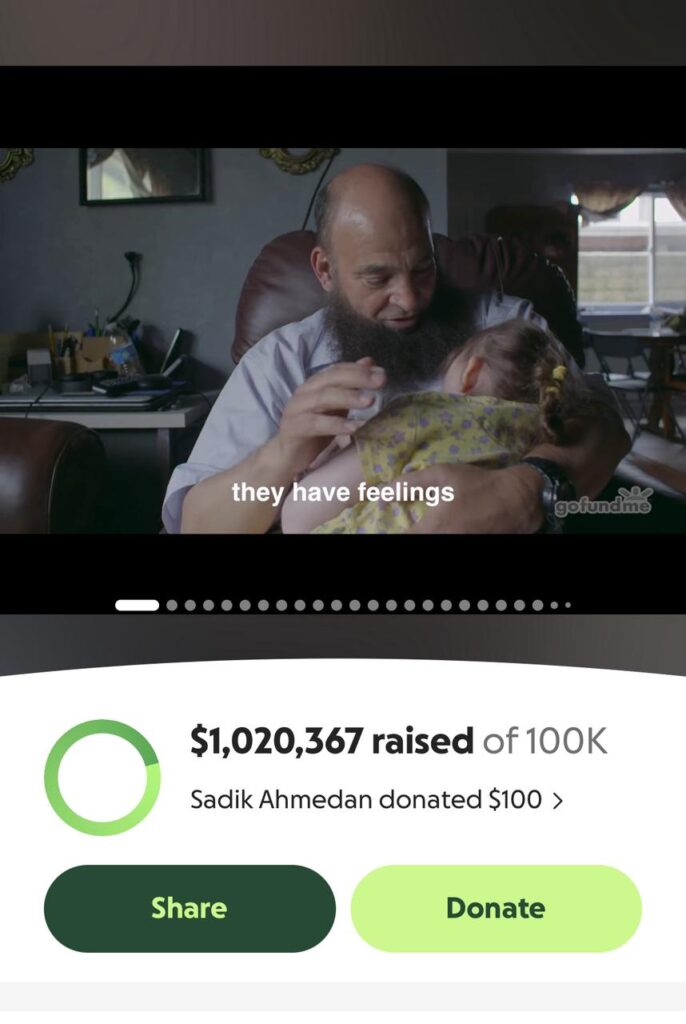
Remarkably, despite the outpouring of donations, Bzeek hasn’t spent most of the money. He has barely touched the money.
Instead, he has a bigger dream. He hopes to one day use the donations to build a warm family-type home for terminally ill kids who would otherwise die alone as patients in basic facilities.
It’s a vision of a place where dying children could experience the warmth of family life, where they could sit at a dinner table and feel cared for, where they would have names and histories and people who loved them.
When people ask Bzeek how he does it — how he chooses this heartbreak over and over again — he has a simple answer.
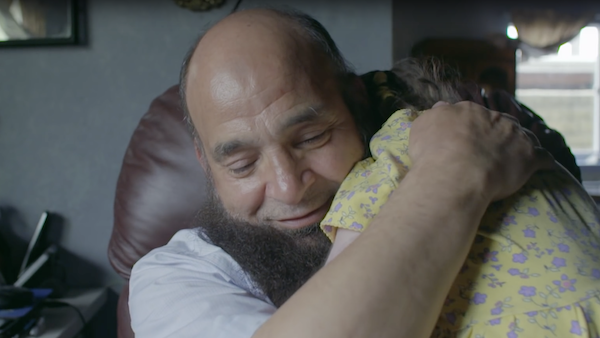
“The key is, you have to love them like your own,” he says. “I know they are sick. I know they are going to die. I do my best as a human being and leave the rest to God.”
He’s not looking for recognition or thanks. He’s not in it for the money or the attention. He’s simply responding to what he believes is a fundamental human obligation: to show up for those who have nowhere else to go, to hold them when they’re scared, to let them know they’re not alone.
In a world that often feels divided and fractured, Mohamed Bzeek stands as a quiet reminder of something we’re in danger of forgetting: that compassion is authentic, that sacrifice matters, and that one person with a willing heart can change everything for a child who has nothing else.
His life is a testament to the power of showing up, of choosing love even when it breaks you, and of believing that every single person — no matter how sick or how short their time on earth — deserves to be known, named, and loved.
That’s not a miracle. That’s just Mohamed Bzeek, doing what nobody else will do, because somebody has to.
Image via Guardian of Angels

