
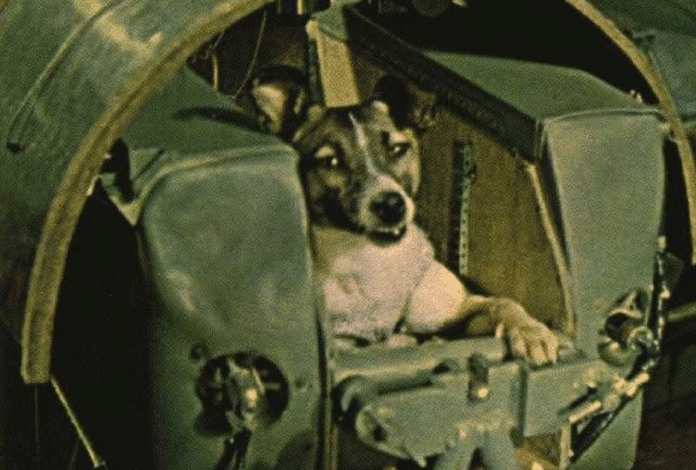
On a cold November morning in 1957, a small stray dog from the streets of Moscow made history in the most bittersweet way imaginable. Her name was Laika, and she became the first living creature to orbit our planet. However, behind this remarkable achievement lies a story that still tugs at our hearts nearly 70 years later.
Laika was just a stray mongrel wandering the bustling streets of Moscow when she was picked up by Soviet scientists in October 1957. Weighing just over 10 pounds, life as a stray in 1950s Moscow had been tough—the streets were packed with cars, sidewalks crowded with fast-moving pedestrians, and winters were brutally cold.
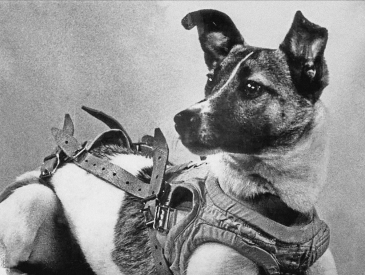
The Soviet space program specifically sought female stray dogs because they were smaller and apparently more docile. Laika, whose name means “barker” in Russian, was actually born with a different name: Kudryavka, meaning “Little Curly.” She got her famous name after she was introduced to the public via radio and started barking.
What made Laika stand out was not just her small size—it was her calm, gentle temperament. Initially, another dog named Albina had actually outperformed Laika in training. However, Albina had recently given birth to puppies and had won the affections of her keepers, so she was spared from the fatal flight. Laika, just three years old, was chosen instead.
The launch of Sputnik 2 was not just about scientific discovery—it was a political statement. Soviet Premier Nikita Khrushchev wanted a “space spectacular” to coincide with November 7, 1957, the 40th anniversary of the Bolshevik Revolution. This meant the team had to work at breakneck speed.
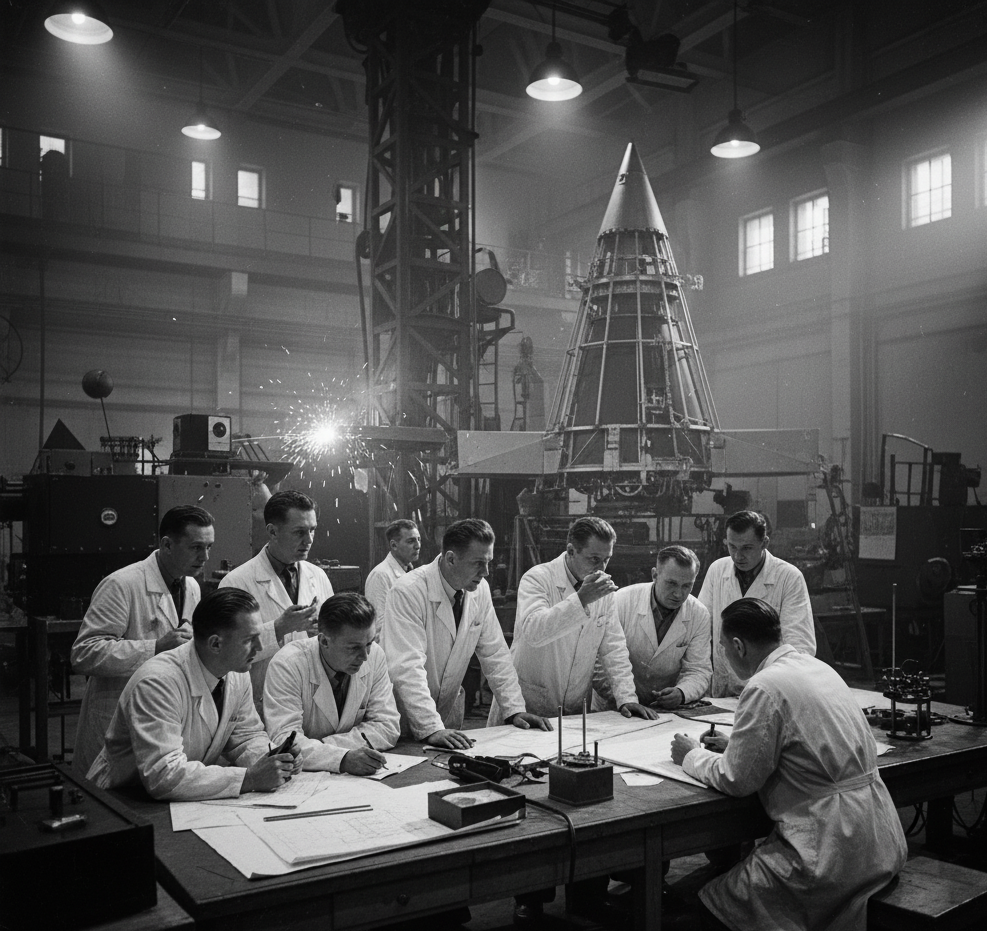
Engineers often worked without blueprints, building the spacecraft hastily to meet the impossible deadline. They had learned from the success of Sputnik 1, which had launched just a month earlier on October 4, 1957, becoming the first artificial object to orbit Earth. Now they were pushing the boundaries even further.
The training Laika endured was grueling. Three dogs—Albina, Mushka, and Laika—were trained for the mission. To adapt them to the tiny cabin of Sputnik 2, they were kept in progressively smaller cages for up to 20 days. This extreme confinement caused the dogs to stop urinating and defecating, made them restless, and caused their general condition to deteriorate.
Doctors performed surgery on the dogs, embedding medical devices in their bodies to monitor heart impulses, breathing rates, blood pressure, and physical movement. Despite the clinical nature of the mission, some handlers grew attached to their canine cosmonauts. Vladimir Yazdovsky, one of Laika’s keepers, took her home shortly before the flight because he “wanted to do something nice for the dog”. He later wrote that Laika was “quiet and charming,” and he let her play with his children, knowing she had so little time left.
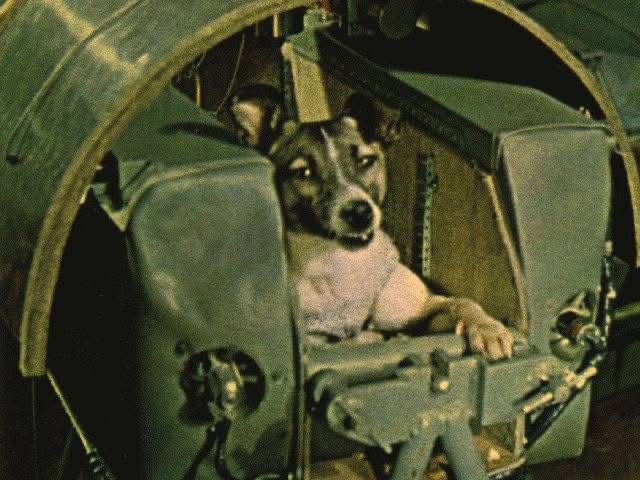
The launch site was so cold that Laika was placed in her capsule three days before launch, with a heater connected to keep her container warm. Just before liftoff, her fur was sponged with a weak ethanol solution and carefully groomed. At the same time, iodine was painted onto the areas where sensors had been placed to monitor her bodily functions.
In a moment that reveals the humanity behind the mission, one of the technicians later stated: “After placing Laika in the container and before closing the hatch, we kissed her nose and wished her bon voyage, knowing that she would not survive the flight”.
The capsule itself was cramped beyond imagination. Laika was fitted with a harness and chains that restricted her movements to sitting, standing, or lying down—the tiny space did not even allow her to turn around.
Sputnik 2 weighed 508 kilograms, significantly more than its simpler predecessor. When the rocket launched that morning, Laika’s heart rate jumped from 103 beats per minute before launch to 240 beats per minute during the early acceleration, while her respiration increased to between three and four times her standard rate.
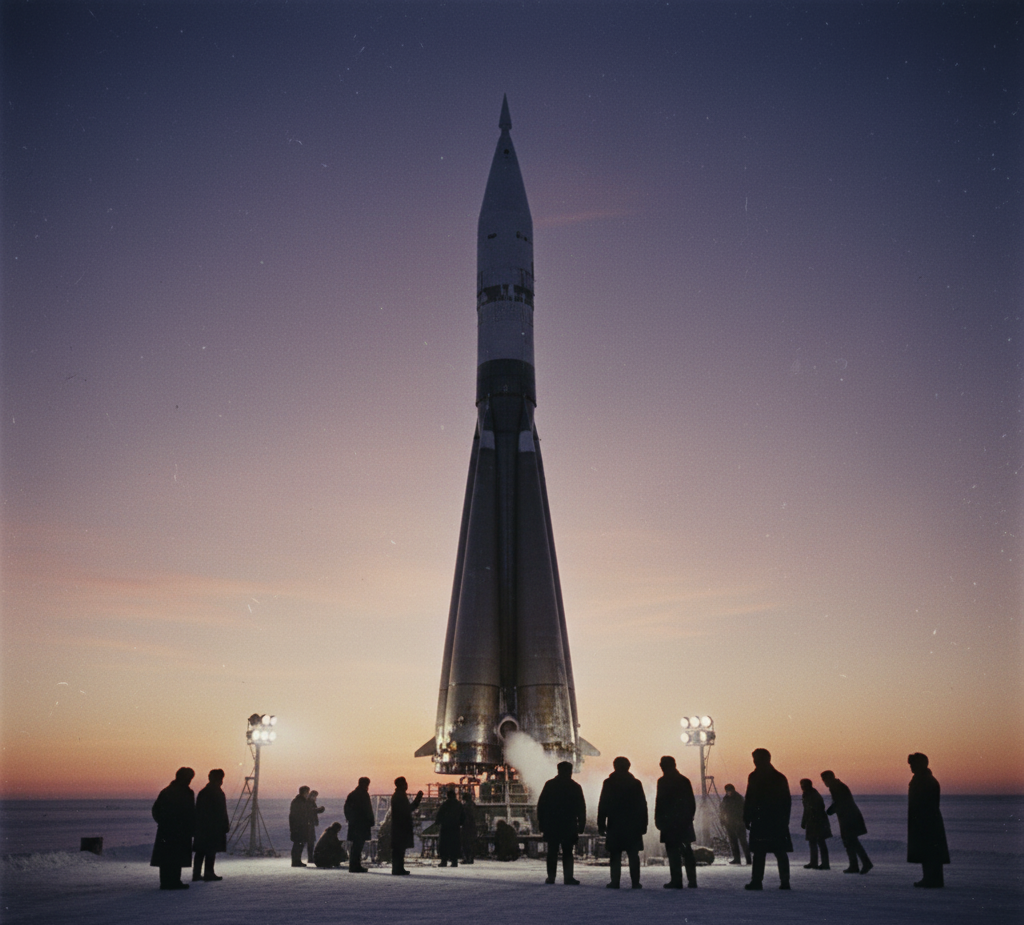
For decades, the official Soviet story claimed that Laika lived for about a week in orbit before dying painlessly from oxygen deprivation. They expected her to die from oxygen deprivation—supposedly a painless death within 15 seconds—after seven days in space. But this wasn’t the truth.
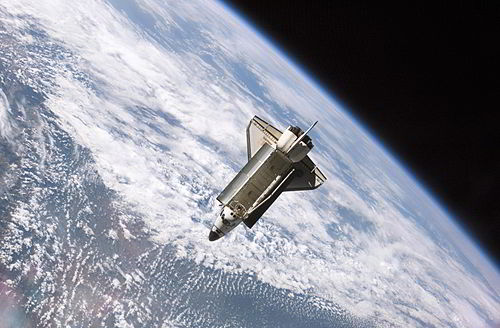
In 2002, Russian scientist Dimitri Malashenkov finally revealed that the previous accounts of her death were false. The reality was far more tragic. Laika died of hyperthermia and stress just a few hours after launch—some sources say it happened on the spacecraft’s fourth orbit, roughly five to seven hours into the mission.
After reaching orbit, Sputnik 2’s nose cone was jettisoned successfully, but the “Block A” core did not separate as planned, preventing the thermal control system from operating correctly. The spacecraft may have overheated because the thermal control system didn’t work properly, and some insulation tore off due to an anomaly during launch.
A malfunction in the cooling system caused the cabin temperature to soar. The temperature inside the spacecraft after the fourth orbit registered over 90 degrees Fahrenheit. For a small dog in a confined space with no way to escape the heat, it was a death sentence.
Soviet scientists had insufficient time to perfect life-support systems because of intense political pressure to launch Sputnik 2 in time for the celebration of the 40th anniversary of the Bolshevik Revolution. The rush to beat the Americans in the Space Race cost Laika any chance of survival beyond those first few hours.
Even though Laika had died within hours, her journey continued. Sputnik 2’s batteries died on November 10, 1957, and the spacecraft stopped beaming data home. Although Laika died just hours into the flight, her body circled Earth 2,570 times aboard Sputnik 2.
Five months after her death, on April 14, 1958, Sputnik 2 finally reentered Earth’s atmosphere. Many people reportedly saw a fiery trail as Sputnik 2 flew over New York and reached the Amazon region in just 10 minutes during its reentry. The spacecraft, along with Laika’s remains, disintegrated, officially ending the mission.
The global reaction to Laika’s mission was mixed. The ethical issues raised by this experiment went largely unaddressed for some time due to the overshadowing Soviet-U.S. Space Race. However, the mission sparked a debate across the globe on the mistreatment of animals and animal testing in general.
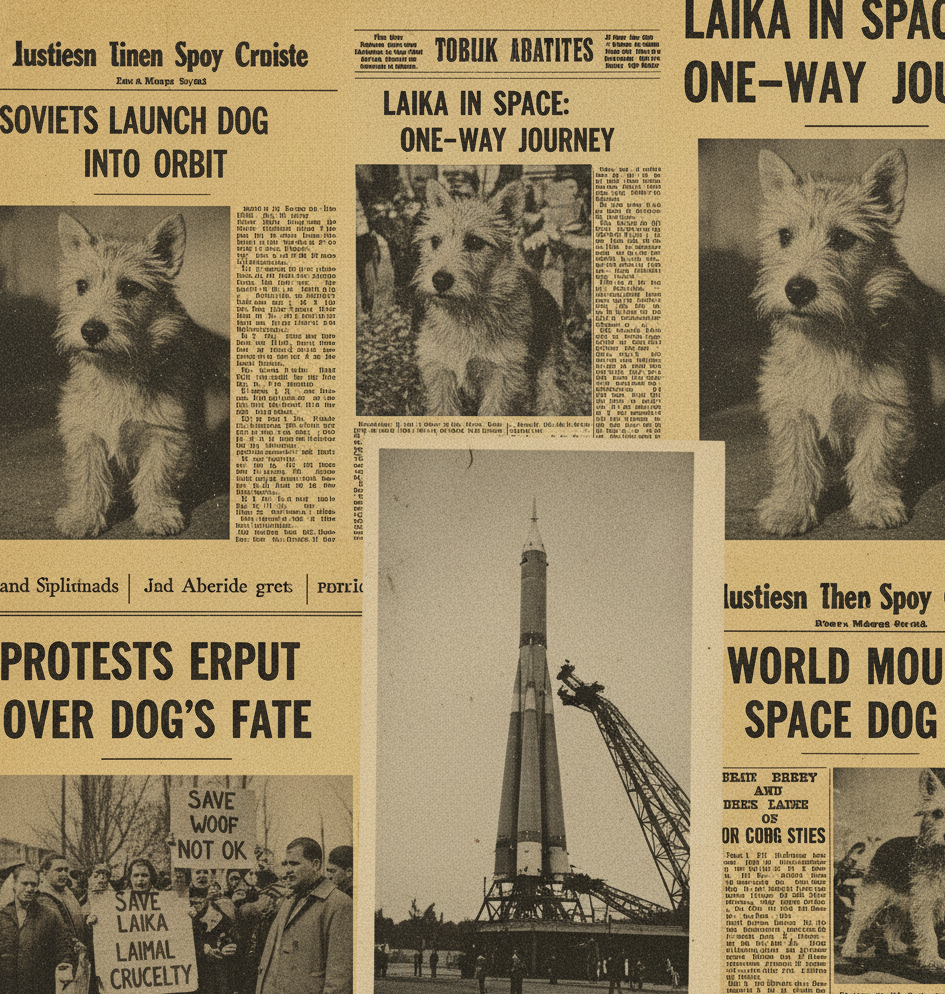
In the United Kingdom, the National Canine Defence League called on all dog owners to observe a minute’s silence on each day Laika remained in space. At the same time, the Royal Society for the Prevention of Cruelty to Animals received protests even before Radio Moscow had finished announcing the launch.
American newspapers created playful headlines like “Muttnik,” “pupnik,” and “sputpup,” but British media was especially full of feeling for the dog and outrage toward the Russians, with the Daily Mirror proclaiming “THE DOG WILL DIE, WE CAN’T SAVE IT”.
Years later, one of the mission’s leading scientists, Oleg Gazenko, expressed deep regret, saying: “The more time passes, the more I’m sorry about it. We shouldn’t have done it. We did not learn enough from this mission to justify the death of the dog”.
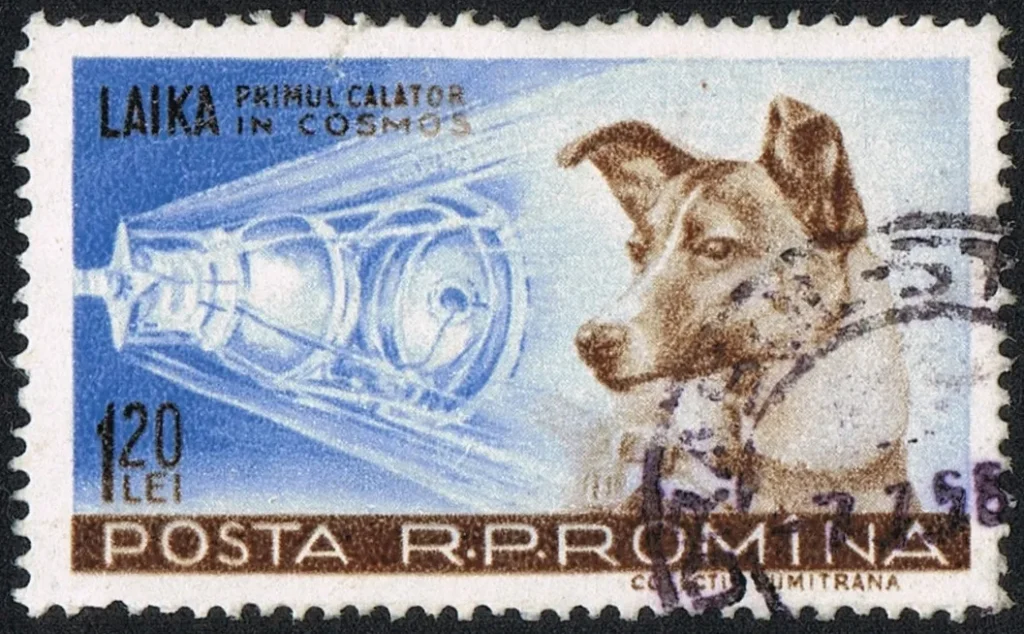
Today, Laika is remembered as both a pioneer and a victim. In 2008, a small monument depicting her standing atop a rocket was unveiled near the military research facility in Moscow that prepared her flight. She also appears on the Monument to the Conquerors of Space in Moscow. Between 1957 and 1987, Soviet allies such as Romania, Albania, Poland, and North Korea issued Laika postage stamps.
Laika’s sacrifice wasn’t entirely in vain. Little was known about the effects of spaceflight on living creatures at the time, and animal flights were viewed by engineers as a necessary precursor to human missions. Her mission provided some of the first data on how living organisms respond to being launched into orbit, to weightlessness, and to increased radiation.
Future Manned Spacecraft Center Director Robert Gilruth said: “When I saw the dog go up, I said, ‘My God, we better get going because it’s going to be a legitimate program to put man in space'”. Just three and a half years after Laika’s flight, on April 12, 1961, Soviet cosmonaut Yuri Gagarin became the first human to orbit Earth—and unlike Laika, he returned safely.

The Soviet Union eventually succeeded in returning animals safely from space, paving the way for human spaceflight. However, Laika’s story reminds us of the ethical price of progress. In our rush to achieve greatness, we must always ask ourselves: at what cost?
Today, animal testing in space programs has largely been replaced by advanced technology. However, Laika’s story continues to resonate, a poignant reminder of a little dog who never chose to be a hero, who wanted to survive on the streets of Moscow, and who ended up writing her name in the stars—at the ultimate price.
Her legacy is complex: she is both a symbol of human achievement and a reminder of our responsibility to treat all living creatures with compassion and respect, even in our pursuit of knowledge and progress.

